Are you dreaming of a tropical getaway with more than one beach? Island hopping is the perfect way to see the Pacific’s varied beauty. You’ll discover everything from volcanic craters to hidden waterfalls.
Choosing the right Hawaii packages makes planning easier. These deals cover flights and places to stay, so you can enjoy your trip more. Planning your Hawaii vacation well lets you see the best of each island.
A good Hawaii travel guide is your key to exploring the islands. With some planning, you can make a trip that turns your dreams into reality. Let us guide you to make your tropical dreams come true.
Key Takeaways
- Island hopping lets you see each island’s unique charm.
- Travel packages make planning easier by covering flights and stays.
- Start researching early to find the best places and times.
- A travel guide helps you find the top spots across the islands.
- Good planning means a trip that’s full of paradise.
Planning Your Island Hopping Strategy
Planning a trip to Hawaii is more than just booking flights. It’s about knowing what you want from your trip. Good Hawaii travel planning makes your trip exciting and relaxing. Start by thinking about what you like to do and see.
Defining Your Travel Style
Everyone wants different things from their trip. Maybe you love hiking or maybe you prefer relaxing in a luxury resort. Knowing what you want helps you pick the best islands for your island hopping trip.
If you want fancy resorts and great food, Maui or Oahu might be for you. But if you love nature and adventure, Kauai or the Big Island could be better. Think about what you like to do and where you feel at home.
| Travel Style | Primary Focus | Recommended Island |
|---|---|---|
| Luxury Seeker | Resorts & Spas | Maui |
| Adventure Enthusiast | Hiking & Nature | Kauai |
| Culture Buff | History & Museums | Oahu |
Determining the Ideal Duration for Each Island
Trying to see too much in a short time is a common mistake. Island hopping takes a lot of planning and can be tiring if you rush. Spend at least three to four nights on each island to really enjoy it.
“The beauty of the islands is not found in how many you visit, but in how deeply you experience the spirit of each one.”
Spending more time on each island lets you explore without feeling rushed. This way, you can make spontaneous discoveries. A well-planned trip means you’ll return home feeling refreshed, not tired.
Choosing the Right Hawaii Packages for Your Budget
Your Hawaii budget sets the stage for your dream vacation. It doesn’t matter if you’re solo or with a big family. Knowing how to spend your money is key for a worry-free trip.
Looking at different booking options helps stretch your dollars without losing out on quality. Good Hawaii travel planning lets you focus on what’s most important to you.
All-Inclusive Bundles vs. A La Carte Booking
Many pick Hawaii packages for their ease and set prices. These deals include flights, hotel stays, and sometimes island hopping. This makes planning much simpler.
A la carte booking gives you more freedom to plan your trip your way. It takes more work but lets you choose special hotels or local tours not in standard packages.
| Feature | All-Inclusive Bundles | A La Carte Booking |
|---|---|---|
| Convenience | High | Low |
| Customization | Limited | High |
| Cost Predictability | Excellent | Variable |
| Best For | Families & First-timers | Experienced Travelers |
Identifying Value-Driven Travel Deals
To save on your Hawaii budget, look for deals in off-peak seasons. Resorts often cut prices in April, May, September, and October.
Good Hawaii travel planning also means joining airline and hotel newsletters. These can give you early access to special Hawaii packages.
Always compare the total cost of a package to booking things separately. Sometimes, what seems like a deal can have hidden costs or limited travel times.
Step One: Selecting Your Primary Islands
Hawaii tourism offers a wide range of experiences. Choosing the right islands is crucial for a perfect trip. Each island has its own unique vibe, catering to different travelers. Knowing the character of these Hawaii islands helps you create an itinerary that matches your interests.
Oahu: The Hub of Culture and History
Oahu is the lively heart of Hawaii, mixing modern city life with rich history. Visitors love Pearl Harbor and Waikiki Beach. It’s great for those who enjoy shopping, dining, and cultural sites.
Maui: The Perfect Blend of Adventure and Relaxation
Maui is famous for its mix of adventure and calm. You can drive the scenic Road to Hana in the morning and relax on the beach in the afternoon. It’s perfect for a balanced vacation that’s both fun and relaxing.
Kauai: Exploring the Garden Isle
Kauai is for those who love untouched beauty. Known as the Garden Isle, it has stunning cliffs, rainforests, and Waimea Canyon. It’s ideal for hikers and nature enthusiasts who prefer a slower, more intimate pace.
The Big Island: Volcanic Wonders and Diverse Landscapes
The Big Island is known for its vast geological variety. You can see active volcanoes at Hawaii Volcanoes National Park or explore lava fields. It’s a must-see for those interested in natural forces shaping the Hawaii islands.
| Island Name | Primary Appeal | Best For |
|---|---|---|
| Oahu | Culture & History | City Lovers |
| Maui | Adventure & Beaches | Couples & Families |
| Kauai | Nature & Scenery | Hikers |
| Big Island | Volcanoes & Geology | Explorers |
Step Two: Coordinating Inter-Island Flights and Logistics
Getting the logistics right is key to a stress-free island-hopping vacation. When you travel between islands, the flight time should be minimal. Good planning means more beach time and less airport waiting.
Navigating Hawaiian Airlines and Southwest Airlines
Travelers to the Hawaii islands often pick between Hawaiian Airlines and Southwest Airlines. Hawaiian Airlines offers a full-service experience with daily flights. Southwest Airlines is known for its two free checked bags per passenger.
Choosing the right airline depends on your trip and luggage. Both airlines are reliable, but book early for the best prices. Consistency in your booking keeps your trip smooth.
| Airline | Primary Benefit | Baggage Policy |
|---|---|---|
| Hawaiian Airlines | Frequent Schedules | Fee-based |
| Southwest Airlines | Two Free Bags | Included |
| Inter-Island | Quick Transit | Varies |
Timing Your Transfers to Maximize Daylight
Book flights for early morning departures. This way, you arrive by midday, giving you a full afternoon to explore. Maximizing daylight is key for seeing the best spots under the sun.
“The secret to a perfect multi-island itinerary is treating your travel days as part of the adventure, not just a transition between points.”
Managing Luggage Restrictions Between Islands
Luggage management is crucial for island hopping. Each airline has weight limits, and going over can cost extra. Pack light to make your travel between the Hawaii islands easy and affordable.
Use soft-sided luggage for easy storage in small bins. Keeping your luggage organized and within limits saves you from last-minute repacking. Smart packing is essential for a smooth trip.
Step Three: Booking Accommodations Across Multiple Locations
Your choice of Hawaii accommodation can truly define the rhythm of your island-hopping adventure. While you coordinate your inter-island flights, it is vital to ensure your lodging aligns with your daily activity goals. A well-planned stay allows you to transition smoothly between the unique vibes of each island.
Selecting Resorts vs. Boutique Vacation Rentals
Deciding between a full-service resort and a boutique vacation rental depends on your personal travel style. Resorts often provide all-inclusive amenities like pools, concierge services, and on-site dining, which simplify your logistics. These are perfect if you prefer a stress-free environment where everything is handled for you.
Conversely, boutique vacation rentals offer a more authentic, local experience. You might find yourself in a charming cottage or a condo with a kitchen, allowing for more flexibility in your daily schedule. This choice often feels more like a home away from home during your travels.
Strategic Location Planning to Minimize Travel Time
To maximize your time, you should select lodging that sits close to your primary points of interest. If you plan to visit the North Shore of Oahu, staying in Waikiki might lead to long, unnecessary drives. Strategic placement reduces the hours spent in traffic and gives you more time to enjoy the scenery.
Consider the following comparison to help guide your decision-making process:
| Lodging Type | Best For | Key Benefit |
|---|---|---|
| Large Resorts | Families & Luxury Seekers | Full service and convenience |
| Boutique Rentals | Couples & Independent Travelers | Privacy and local immersion |
| Hostels/Inns | Budget-Conscious Explorers | Cost-effective social atmosphere |
Leveraging Loyalty Programs for Multi-Island Stays
You can significantly lower your costs by sticking to specific hotel chains that operate across multiple islands. Many major brands allow you to earn and redeem points for your inter-island flights or future stays. Always check if your preferred Hawaii accommodation participates in a global loyalty program before you finalize your booking.
Signing up for these programs early can unlock member-only rates and free room upgrades. By consolidating your bookings, you turn your vacation into a rewarding experience that pays off long after you return home. Consistency is key when you want to maximize the value of your travel budget.
Step Four: Crafting a Balanced Itinerary
Creating a balanced Hawaii itinerary is key to a memorable trip. It’s tempting to see every waterfall and beach. But rushing can lead to exhaustion, not relaxation.
Prioritizing Must-See Landmarks
First, list your must-see spots for each island. Think of the sunrise at Haleakala or Pearl Harbor’s historic sites. Aim for one big activity each day.
This way, you avoid spending all your time in a car. It lets you enjoy places that really interest you.
Incorporating Downtime to Avoid Travel Fatigue
Travel fatigue is a big risk when island-hopping. Make sure to include “do-nothing” afternoons. Just relax by the pool or take a walk on the beach.
“The best travel experiences happen when you leave room for the unexpected and allow yourself the grace to rest.”
Resting is crucial to stay energized during your Hawaii vacation. Vacations are a break from daily life’s rush.
Balancing Tourist Hotspots with Hidden Gems
A good Hawaii itinerary mixes famous spots with local secrets. Famous beaches are great, but small coves offer a real connection to nature.
Alternate days between busy places and quiet trails. This way, you dodge big crowds but still see Hawaii’s iconic beauty.
Step Five: Managing Transportation and Rental Cars
Getting around Hawaii is key to a great trip. The islands have many ways to travel, but the best choice depends on where you’re going and what you plan to do. Planning ahead means less waiting and more time to enjoy the beautiful scenery.
The Necessity of Rental Cars on Different Islands
Rental cars Hawaii are often the best option for exploring. Public transport can’t reach many of the islands’ hidden spots. Having your own car gives you the freedom to go wherever you want, whenever you want.
Navigating Public Transit and Rideshare Options
In cities like Honolulu, you might not need a car. The “TheBus” system is reliable and cheap for getting around the city. Uber and Lyft are also good for short trips or nights out without driving.
Booking Vehicles in Advance During Peak Seasons
Vehicle demand goes up during holidays and summer. Booking early is crucial to avoid high prices or no availability. Booking your transport early ensures a car will be ready for you at the airport, making your trip smooth.
| Transport Mode | Best For | Cost Level | Flexibility |
|---|---|---|---|
| Rental Car | Remote Exploration | Moderate to High | Very High |
| Public Bus | Urban Commuting | Low | Low |
| Rideshare | Short Trips | Moderate | Medium |
Step Six: Packing for Diverse Microclimates
Mastering your Hawaii packing list is key to enjoying your island-hopping trip. The islands have everything from dry plains to green rainforests. Your suitcase must be as flexible as your plans. Proper preparation ensures you stay comfortable no matter the weather or elevation.
Preparing for Beach Days and Mountain Hikes
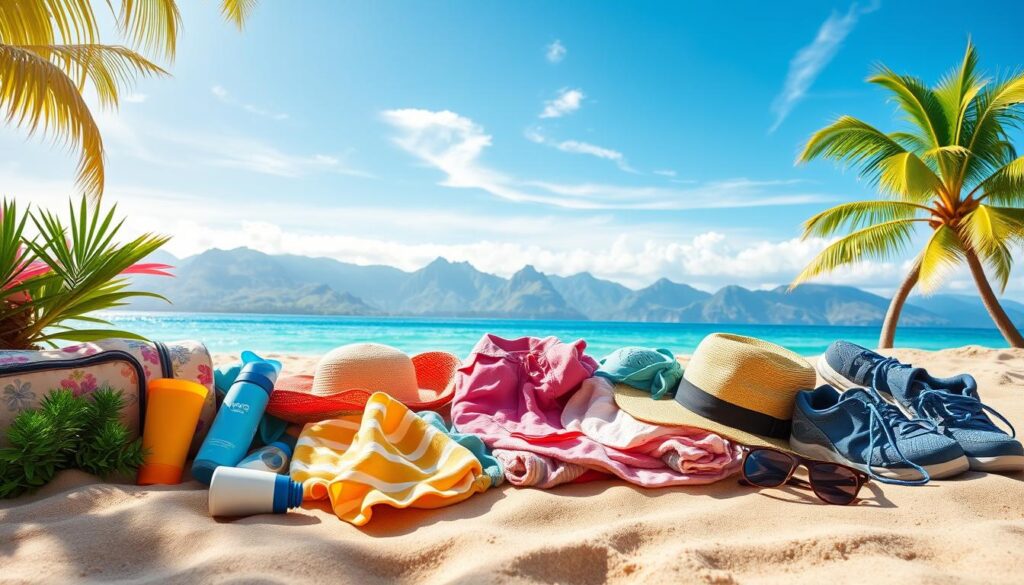
Your gear should be ready for both relaxation and adventure. For beach days, pack reef-safe sunscreen, polarized sunglasses, and quick-dry swimwear. For mountain hikes, wear sturdy hiking boots to handle slippery paths.
Remember to bring clothes that keep you cool in the humidity. A small, lightweight daypack is vital for carrying water and snacks. Having the right equipment lets you easily move from beach to mountain.
Essential Gear for Tropical Rain and High Altitudes
The weather in paradise can change fast. Include a lightweight, breathable rain jacket in your list to stay dry. For high-altitude spots like Haleakala or Mauna Kea, pack a warm fleece or light down jacket.
“Travel is the only thing you buy that makes you richer.”
Temperatures at high elevations can be very cold, sometimes near-freezing at night. Layering is your best strategy for these extreme changes. Always check the local forecast for the mountain regions you plan to visit.
Optimizing Your Luggage for Frequent Transitions
Traveling between islands needs a smart approach to packing. Use packing cubes to organize your items. This makes unpacking and repacking faster, keeping your clothes tidy.
Choose a lightweight, durable suitcase for easy travel. Keep your essentials, like chargers and travel documents, in a carry-on for quick access. Efficient luggage means more time for enjoying the islands.
Step Seven: Budgeting for Hidden Costs
Your dream vacation in the islands should be memorable for the right reasons, not for unexpected financial surprises. The Pacific’s allure is undeniable, but keeping a close eye on your Hawaii budget is key for a smooth trip. Many travelers focus on big-ticket items, but small expenses often dictate the trip’s success.
Accounting for Resort Fees and Parking Charges
When booking your Hawaii accommodation, read the fine print about mandatory resort fees. These daily charges are often not included in the initial price and can add significant costs. If you plan to use rental cars Hawaii, remember to account for daily parking fees at your hotel.
“A budget is telling your money where to go instead of wondering where it went.”
Many resorts in popular areas charge between $30 and $60 per night for parking alone. Always verify these costs before finalizing your booking to avoid a shock at checkout.
Estimating Daily Food and Activity Expenses
Food costs in the islands can vary wildly depending on your dining preferences. Local food trucks offer delicious and affordable meals, while fine dining at resorts will consume your funds faster. Set a daily allowance that covers three meals plus snacks and beverages.
| Expense Category | Budget Tier | Estimated Daily Cost |
|---|---|---|
| Dining | Moderate | $75 – $125 |
| Activities | Adventure | $50 – $150 |
| Parking | Standard | $25 – $50 |
Setting Aside an Emergency Fund for Travel Disruptions
Even the most meticulously planned trips can face unexpected hurdles. Flight delays, medical needs, or last-minute changes in plans can create financial strain if you are not prepared. We recommend setting aside an emergency fund specifically for these types of travel disruptions.
- Keep at least 10% of your total budget in a liquid savings account.
- Ensure you have access to a credit card with no foreign transaction fees for emergencies.
- Consider purchasing travel insurance to protect your investment against cancellations.
By accounting for these hidden costs, you can secure your trip without financial stress. A well-prepared Hawaii budget lets you enjoy the islands’ beauty without worrying about your bank account balance.
Essential Tips for a Seamless Experience
A memorable trip to the islands needs good planning and respect for local life. Your Hawaii packing list is key for comfort. But, your attitude makes your trip truly special. Focus on these areas for a smooth and rewarding visit.
Respecting Local Culture and Environmental Guidelines
Good Hawaii tourism means caring for the land and people. Stay on trails to protect nature and don’t touch marine life. The islands are a home, not just a vacation spot.
“The land is a chief; man is its servant.”
Always ask before visiting private or sacred places. Showing genuine respect helps keep cultural sites for the future.
Staying Connected with Reliable Mobile Coverage
Good communication is crucial for island explorers. Major carriers work well in cities, but signals can fade in remote areas. Download offline maps to avoid getting lost.
If you work or stream online, check your provider’s island policies. A stable connection is vital for emergencies and navigation.
Utilizing Local Apps for Real-Time Updates
Local apps are your ally in the islands’ unique landscape. They offer updates on weather, surf, and traffic. This helps you adjust plans quickly, like during sudden rain or traffic jams.
Check official state sites for park closures or volcanic news. Using digital resources wisely keeps your trip flexible and stress-free.
Conclusion
Learning to island hop makes any trip unforgettable. This guide helps you explore Oahu, Maui, Kauai, and the Big Island with ease.
You now have the skills to handle travel plans and stay within your budget. These tips will help you enjoy the islands’ culture and beauty.
Good planning is key to a worry-free trip. It lets you enjoy the unexpected moments that make a vacation special.
Don’t forget to share your island adventures with others. This keeps the excitement of exploring alive. Your next trip to the Pacific is waiting for you.